
Security: how we handle plant networks and data
A data gateway on your plant network is a new asset and a new path out of the plant. This page says how we build that path, answers the questions CISA suggests asking suppliers, and states plainly what we do not hold.
For: IT/OT leads, controls engineers and plant managers
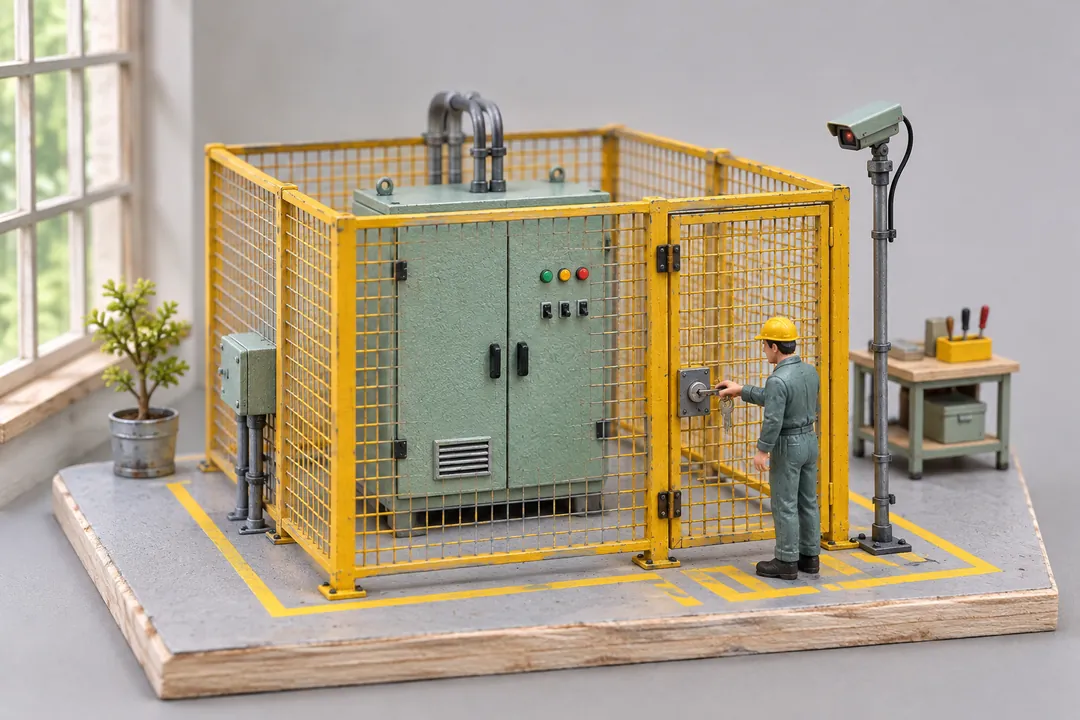
To give you shift-level answers, OpenGXT puts a gateway on your plant network and sends data to hosted software. That is a new asset and a new path out of the plant, and your IT/OT lead is right to ask how it is built before anything is connected. This page sets out our approach, answers the questions CISA suggests asking suppliers of OT products, and maps the approach to public guidance.
OpenGXT holds no security certifications. We have no SOC 2 report, no ISO 27001 certificate and no ISA/IEC 62443 certification. Our approach is informed by NIST SP 800-82, the NIST Cybersecurity Framework 2.0, ISA/IEC 62443 concepts and CISA guidance, and we write it down so your team can check it against your own rules.
How the connection is built
- Outbound only. The gateway opens connections from inside the plant to the hosted software. No inbound ports are opened on the plant network, and no rule is added that lets traffic from the internet start a connection to the plant floor.
- Read-only by default. The gateway reads controllers, meters and sensors. Writing a value back to a controller is out of scope unless it is agreed in writing.
- Your controls engineer owns the programs. No PLC or CNC program is changed without the plant’s controls engineer. If a tag needs to be exposed, they decide how.
- Credentials in a vault. Passwords, keys and certificates are stored in a password vault, never in documents or email.
- Encryption in transit. Data from the gateway to the hosted software travels over encrypted connections (MQTT over TLS), and people reach the software over HTTPS.
- Access logging. Access to the hosted software and the gateway is logged, so you can see who signed in and when.
- Tested backups. Hosted data and configurations are backed up, and the backups are tested by restoring them.
- A named contact for incidents. Each engagement names the person to call at OpenGXT, and the person we call at your plant.
- Outside the control path. The gateway is not part of any control loop. If it fails or the internet drops, the machines keep running, and the gateway stores data and forwards it when the link returns.
Answers to the CISA Secure by Demand questions
In January 2025, CISA, with the NSA, FBI, EPA, TSA and international partners, published Secure by Demand guidance to help OT owners and operators procure digital products. Its companion fact sheet lists twelve elements, each with questions buyers should ask. The guidance is written mainly for products that control physical processes, such as PLCs and HMIs. OpenGXT’s software reads data and does not control machines, but most of the questions still apply, so here are our answers.
| Element | What the guidance asks, in short | Our answer |
|---|---|---|
| Configuration management | Can configurations be backed up and restored? Is there a plan for interruptions? | Gateway and software configurations are backed up and recorded in the change log, and backups are tested by restoring them. The administrator runbook includes the incident steps and contacts. |
| Logging | Are logins and changes logged? | Access to the hosted software and the gateway is logged, and every configuration change is recorded in the change log. |
| Open standards | Does it support open, interoperable standards? | OPC UA, MQTT with Sparkplug B, Modbus, MTConnect, SQL and CSV at the edge; CSV, Parquet, a SQL dump and a documented REST API for export. See the open data commitment. |
| Ownership | Can you operate without depending on the supplier, and use local engineering firms? | You keep the documentation set and receive a written exit plan at go-live. Your controls engineer or integrator stays in charge of your controllers. |
| Protection of data | Is data encrypted? Is it shared or sold? | Data is encrypted in transit. We do not sell client data or pool it with other clients’ data. How hosted data is stored, including encryption at rest, is set out in the proposal. |
| Secure by default | Are insecure defaults removed? | Read-only access and outbound-only connections are the defaults. Anything beyond them is a written change approved by the plant. |
| Secure communication | Are certificates simple to deploy and renew? | OPC UA security settings and certificates are agreed with your team and recorded in the connection plan. Renewals are part of support and maintenance. |
| Secure controls | Does the product assume a malicious actor? | The design assumes the gateway could be attacked: it holds read-only accounts, accepts no inbound connections and sits outside the control path. |
| Strong authentication | Are shared passwords gone? Is multifactor authentication included? | Accounts in the hosted software are issued to named people, not shared, so the access log shows who did what. Sign-in requirements, including multifactor authentication, are stated in the proposal. |
| Threat modeling | Can the supplier name the attack paths it considered? | An inbound path to controllers (closed by the outbound-only design), stolen credentials (vault, no credentials in email), a compromised gateway writing to controllers (read-only accounts) and data loss during outages (store and forward, tested backups). The data-flow and network diagram shows every connection. |
| Vulnerability handling | Is there a software bill of materials, machine-readable advisories and a disclosure policy? | Ask us in writing. The proposal answers each point, including where the answer today is no. |
| Upgrade and patch tooling | Are patches tested and safe for existing configurations? | Patches and updates are part of support and maintenance. They are scheduled with the plant, recorded in the change log, and each gateway change has a rollback step. |
How the approach maps to public guidance
| CSF 2.0 function | What OpenGXT does | Related guidance |
|---|---|---|
| Govern | Writes down roles, change control and incident contacts for each engagement; states that no certifications are held | NIST CSF 2.0 |
| Identify | Delivers a signal inventory and a data-flow and network diagram; lists the gateway as an asset | CISA asset inventory guidance |
| Protect | Outbound-only connections, read-only access, vaulted credentials, encryption in transit | NIST SP 800-82; ISA/IEC 62443 zones and conduits |
| Detect | Access logging; monitoring of gateways and data flow | NIST SP 800-82 |
| Respond | Named incident contacts; incident steps in the administrator runbook | NIST CSF 2.0 |
| Recover | Tested backups; store and forward at the gateway; a written exit plan | NIST CSF 2.0 |
NIST SP 800-82. Revision 3, published in September 2023, is NIST’s guide to securing operational technology while addressing its own performance, reliability and safety requirements. That is why our design keeps the gateway out of the control path and reads rather than writes. The initial public draft of Revision 4 was published on September 21, 2026, with comments due November 30, 2026. It names the Industrial Internet of Things and cloud environments in its scope and aligns its countermeasures with CSF 2.0. Until Revision 4 is final, we treat Revision 3 as the current guide.
NIST CSF 2.0. Released on February 26, 2024, the Cybersecurity Framework 2.0 explicitly aims to help all organizations. Its core functions are Govern (new in 2.0), Identify, Protect, Detect, Respond and Recover, which is how the table above is arranged.
ISA/IEC 62443. The series defines requirements and processes for implementing and maintaining electronically secure industrial automation and control systems. We use its concepts, mainly treating the plant floor as a zone and the gateway’s single outbound connection as a conduit with written rules. We hold no certification to it.
CISA asset inventory guidance. CISA’s “Foundations for OT Cybersecurity” guidance (August 13, 2025) describes an asset inventory as an organized, regularly updated list of an organization’s systems, hardware and software, classified by function and criticality. The signal inventory and network diagram we deliver can feed your inventory, and the gateway itself belongs on your list.
What we ask of your team
- Decide where the gateway sits and approve the outbound firewall rule.
- Have your controls engineer create read-only accounts and confirm what can be read.
- Name the person we call at your plant if something looks wrong.
- Add the gateway to your asset inventory, and review our documents against your own policy.
Before any supplier connects to your plant, the OT security checklist, based on NIST SP 800-82 and CISA guidance, is a good way to check where you stand. The connection work itself is described on machine connectivity and how we work.
Start with one line.
Tell us which line you want to understand and the question you ask after every shift. We reply with questions or a time to walk it with you.